
Digital Backs for Medium and Large format photography

Specular is the sole authorised supplier of digital backs, camera systems and lenses from Phase One, Leaf and Mamiya for Victoria and Tasmania.

We supply solutions for a large range and types of photography including (but not limited to) :

We've got a large range of solutions, and everybody has different requirements. Call us to talk about the most appropriate solution for you.

Specular also have a range of digital backs and camera systems available for rental & hire.

What cameras can be used?

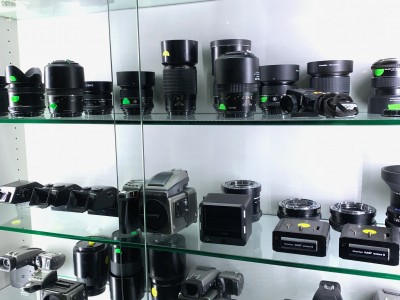
You would be surprised at what type of camera you can put a digital back on. The real factor that determine the viability of your existing camera is what lenses you have and how good those lenses are. New digital lenses are generally very good or even outstanding. Some non-digital lenses are great and provide beautiful image quality, some are not so great and suffer from softness or even discolouration. The best way to know is to test them where you can.

Mamiya 645AFD, 645AFD II, 645AFDIII, RZ67, RZ67 Pro II, RZ Pro IID, RB67
Hasselblad H2, H1 and V series (not including 200 and 2000 versions)
Contax 645AF
Fuji GX680II, GX680III
Bronica SQA/SQAi/ ETRSi
Compatible view cameras Alpa, Arca, Cambo, Horseman, Linhof, Sinar, Toyo, Rollei X-Act2 and others.

In our opinion it is really worth considering a digital back if you have one of the following :

They are all great cameras, clean them up and make them digital!

Pixels and sensor sizes

Digital backs are available in a range of sizes and megapixel amounts. The sensor sizes start at 36.9 x 36.9mm with a 16 megapixel back through to 53.9 x 40.4mm on a 60 megapixel back. The smaller the pixel, the higher the number of megapixels that can be packed into a defined size. CCD sensor sizes can be the same size but have varying capabilities, for example :

Phase One P45+ - 39 megapixels, sensor size: 36.8 x 49.1mm, pixel size: 6.8 x 6.8 microns
Leaf Aptus II 7 - 33 megapixels, sensor size: 36 x 48mm, pixel size: 7.2x 7.2 microns
Phase One P25+ - 22 megapixels, sensor size: 36.7 x 48.9mm, pixel size: 9 x 9 microns

These digital backs all have the same sensor size, but because of the varying pixel size the backs range from 22, to 33 to 39 megapixels. Each sensor has it's own characteristics which makes each one more suited to specific types of photography.

Digital Back features and characteristics

Digital backs can have key features which make them more suitable your your type of photography than another. There is not one digital back that has all the features listed below, but some of them have some or most of them.

Megapixels

Digital backs today range from 16 to 80 megapixels.

Variable resolution

Some of the backs in the Phase One range have a variable resolution technology called Sensor+. Taking the 60.5 megapixel Phase One P65+ as an example, what Sensor+ does is "bin" four 6 micron pixels together so that they effectively become one 12 micron pixel, while retaining the same image coverage. In doing so, though the resolution of the back is reduced by a factor of four to 15 megapixels, the sensitivity is consequently increased by a factor of four, which is two F stops.

CCD sensor size

The CCD sensor size affects the focal length of your lenses. The smaller the CCD size, the larger the focal length magnification factor (or crop) for lenses. For example on a 645 camera a 33x44mm CCD sensor will give a 1.3 lens factor meaning the the focal length of the lenses will be effectively 30% longer (80mm becomes about 104mm), whereas a 37 x49mm CCD sensor will give a 1.1 lens factor meaning the the focal length of the lenses will be effectively 10% longer (80mm becomes about 88mm).

This is very relevant if a photographer want to shoot wide angle as a lens factor could take a super wide 28mm lens to be more like 42mm (1.5 lens factor)

Lens factors generally range from 1 to 1.5.

CCD Sensor manufacturer

There are 2 medium format CCD manufacturers, Kodak and Dalsa. Whilst each CCD has it's own individual characteristics, each manufacturers range of CCDs has their own general characteristics too. These specific characteristics are subjective and often debated on forums, but the reality is that the real benefits are the result of the features of the CCD combined with what the digital back manufacturer can do with their own firmware and especially RAW workflow/processing software.

In general, some of the more common (and relevant) traits of the manufacturers CCDs are :

Dalsa

Kodak

Each manufacturer has a range of CCDs of various sizes, each of the individual CCDs has it's own unique characteristics so the generalities listed above should be used as a guide only.

Sensor rotation

Some digital backs have the ability to be able to rotate the sensor. This is really only applicable for 6x6 format (or larger) camera systems. Some backs can be manually rotated by removing the back, rotating it and re-attaching; again this is really only applicable for 6x6 format (or larger).

Exposure time

Many digital backs have their exposure time limited by the manufacturer to avoid poor image quality results, or it is a limitation of the camera platform. Typically the images would have noise or artefacts on the image at exposures beyond 30 seconds.

Some manufacturers like Phase One, have the capabilities on some of their backs to have exposure times of up to 1 hour without any noise or artefacts. The shortest exposure time for a digital back is 1/10,000 sec, however in the more common camera platforms the fastest shutter speed is 1/4,000 sec.

Shutter speeds of the most common medium format cameras are below :

Capture Speed

Capture speeds are affected by the type of CCD in each camera and the technology that is used to get the information from the CCD to a storage card or computer.
The fastest capture speeds on medium format digital backs (from all manufacturers) are as follows :

Other digital backs generally have a capture rate of about 35 to 50 frames per minute.

ISO range

The ISO capabilities of digital backs today range from 25 to 3200 ISO. Most digital backs are 50-400 or 800 ISO. Phase One are able to achieve higher ISO by using Sensor+ technology where pixels are "binned" together to deliver a smaller file, but with 4 times the sensitivity.

Battery life

Battery life varies dramatically across manufacturers. It also dependant upon environmental conditions, especially temperature. A battery's charge will generally be better in warmer environments and shorter in a colder environment. When shooting in the cold, we recommend to use more batteries and keep them warm while you are not using them (in your pocket or under your coat against your body).

Battery life is also affected by :

RAW files

Whilst all digital backs capture RAW files, different manufacturers have varying techniques for creating and compressing the RAW files whilst still maintaining the high levels of detail. Each of the various RAW files can be processed by various applications.

The following matrix shows the various manufacturers and what software can process the various RAW files.

Digital back manufacturer's RAW file processing matrix,

  Phase One Leaf Mamiya Hasselblad
Capture One All All All -
Leaf Capture - All Some -
Adobe Lightroom Some Some Some Some
Adobe Camera RAW Some Some Some Some
Aperture - Some Some Some
Phocus - - - All

RAW files - Phase One

Phase One use an IIQ file format (Intelligent Image Quality). The Phase One IIQ raw file technology implemented in P+ digital backs secures the finest detail in images while ensuring uninterrupted sessions.

Because of the intelligent lossless compression technology, Phase One IIQ file are the smallest RAW files of all digital backs. As an example A Phase One P40+ (40 megapixel) generates an IIQ RAW file that is approximately 40MB. A Hasselblad H4D-40 (40 megapixel) generates a 3F RAW file that is approximate 56MB. The Leaf Aptus II 8 (40 megapixels generates a lossless MOS RAW file that is approximately 56MB. When each of these files are processed at full resolution, a 120MB file 8-bit RGB TIF is created. The Phase One generated IIQ RAW files save about 30% in storage space.

Phase One also have an EIP (Enhanced Image Package) file format that combines both the RAW file and the settings/adjustments file into one package. Once in EIP format this file can be moved between folders, between computers, or sent by FTP to another computer by itself. On the destination computer the recipient can simply double click the file and Capture One will launch. The only requirement is that the recipient have Capture One 4.7 or higher on their computer. Images wrapped in the EIP format are compatible with OSX’s Quick Look feature which means even computers without Capture One can view a modestly sized preview.

Phase One strongly suggest using Capture One software to process their RAW files (and we do too). Phase One understand the nuances of each digital back and to get the most out of each model they test and refine the processing for each digital back and pack it into Capture One like no other software manufacturer can or does. Areas such as shadows, highlights, skin tones, detail, noise and long exposure capabilities in general are all vastly better using Capture One over any other application. There are other features that also enhance the file and simplify the workflow

RAW files - Leaf

Leaf use a MOS file format (Mosaic).

RAW files - Mamiya

Mamiya digital backs use a combination of IIQ and MOS depending on the model.

RAW files - Hasselblad

Hasselblad has two raw file formats; fff and 3FR. The one format is recorded when shooting tethered and the other when shooting to CF cards. When shooting to CF cards the camera will write the files in 3FR. To work with the 3FR files in Phocus, the 3FR files need to be imported and converted to fff. The 3FR files are readable by Adobe where fff files are not - at least not yet.